
SA Water Masters
Rainwater Harvesting Systems for Your Property
Roof collection, filtration, storage and pumping — designed to make rainwater genuinely usable for irrigation, backup and appropriate household applications.
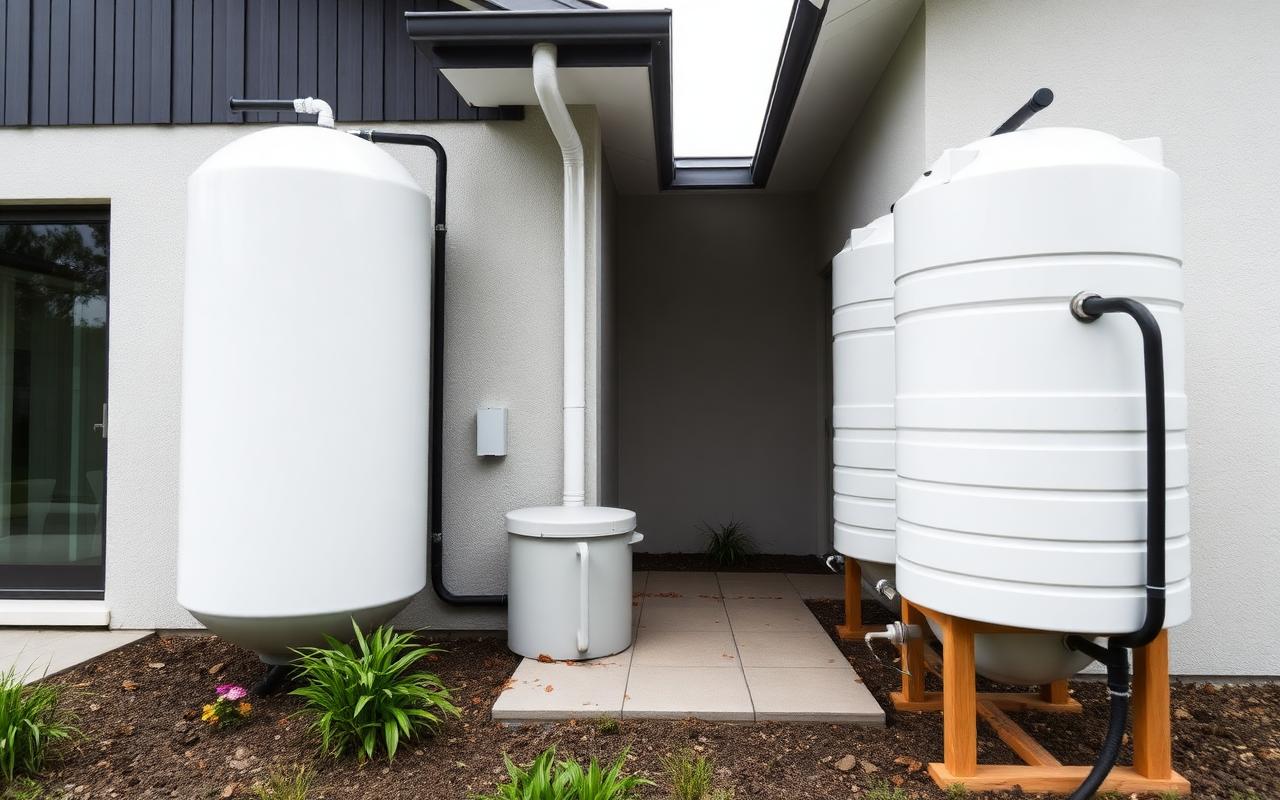
Rainwater harvesting captures water that already lands on your property and would otherwise run into the stormwater system. With the right collection, filtration and storage, it can offset a meaningful share of irrigation and non-potable demand.
How rainwater harvesting works
Roof → Collection → Filtration → Storage → Pumping → End Use. Rain lands on the roof and is channelled by gutters and downpipes into a collection point. Leaf and first-flush filtration removes debris and the dirtiest initial runoff. The water is stored in tanks, then pumped to where it is used — with additional treatment added if the intended use requires it.
System components
- Rainwater collection from suitable roof areas
- Gutters, downpipes, leaf traps and collection points
- First-flush and pre-tank filtration
- Storage tanks sized to roof area and demand
- Filtration appropriate to the intended end use
- Pumps and pressure control for usable delivery
- Irrigation integration
- Backup water applications alongside municipal supply
- Property-specific system design
Potable versus non-potable use
Harvested rainwater can potentially be used for appropriate non-potable applications such as irrigation, washing and toilet flushing. Where potable use is intended, additional treatment is required and the water must be tested to confirm it is suitable for that purpose.
How it works
The rainwater harvesting process
A structured sequence so that what gets installed matches what the property actually needs.
- 01
Assessment
Roof area, rainfall, demand and available tank space are reviewed.
- 02
Design
Collection, filtration, storage volume and pumping are specified.
- 03
Installation
Gutters, filters, tanks, pumps and overflow are installed and connected.
- 04
Use & maintain
Filters and tanks are serviced so the water stays usable.
Before you commit
What to consider
Points worth thinking through — whether you appoint us or someone else.
- Usable roof area and roof material
- Rainfall pattern in your area — a few heavy months versus year-round rain
- Realistic storage volume, and space for the tanks
- Overflow routing so excess water drains safely away from structures
- Keeping tanks light-proof and sealed to limit algae and insects
- The intended end use, which determines the filtration required
- How the system interacts with municipal supply and any backup arrangement
Assess first
We look at the property and the requirement before recommending equipment.
Clear scope
You are told what is included, what is not, and what depends on site findings.
No overselling
Where a smaller solution will do the job, that is what we will propose.
Ongoing support
Maintenance can be arranged so the system keeps performing after handover.
FAQs
Rainwater Harvesting questions
Straight answers, without guarantees we cannot substantiate.
More questions? Read the full FAQ page or browse the Water Knowledge Centre.
Related
Services that often work together
Water Backup Systems
Storage, booster pumps, pressure systems and automatic changeover so the property keeps running during interruptions.
Irrigation Solutions
Designed irrigation for gardens, estates, commercial landscapes and agriculture — built around efficient water use.
Water Purification & Filtration
Filtration and treatment selected from water test results — for drinking water or whole-property supply.
Next step
Design My Rainwater System
Send us the details and we will advise on the appropriate next step for your property.
Prefer to talk it through first? Contact SA Water Masters.
Design My Rainwater System
No obligation. We will confirm what information is needed to advise properly.